How we reduce fall-through rates and gain buyer commitment in today’s market.
At Sandersons, our fall-through rates sitting between 6–12% in recent years are already far lower than the industry average of 30-35%. But for us, that’s not enough. By securing buyer commitment from the outset, and offering protection of up to £10,000, we’re giving our clients greater certainty and peace of mind when moving home.
How we reduce fall-through rates and offer sellers up to £10,000 protection when needed
Let’s be honest, one of the biggest frustrations when selling your home isn’t finding a buyer… it’s keeping one.
Most sellers we speak to aren’t worried about generating interest. They’re worried about what happens next. Will the buyer stay committed? Will the process drag on? Will the deal fall apart weeks before exchange?
It’s a valid concern.
Across the UK, around one in three agreed sales fall through before completion. On average, that costs sellers £3,337 in wasted time, legal fees and lost momentum (Source: House Buyer Bureau). It’s not just frustrating, it’s expensive.
At Sandersons, we’ve spent years focusing on this exact part of the process. With a proactive approach and a dedicated in-house progression team, our fall-through rates have consistently been between 6–12% in recent years, significantly lower than the industry average.
But for us, that still wasn’t good enough.

Why do so many property sales fall through?
The traditional process has a fundamental weakness. An offer is accepted, but nothing is truly secured. Both parties proceed with good intentions, but without any real commitment in place.
That’s where uncertainty creeps in.
As an agent that is emotionally committed to achieving the right outcome for our clients, we are constantly refining how we work. That’s why we are now aligning with government guidance and introducing buyer commitment as standard practice in howwe agree sales.
How do we secure buyer commitment from the start?
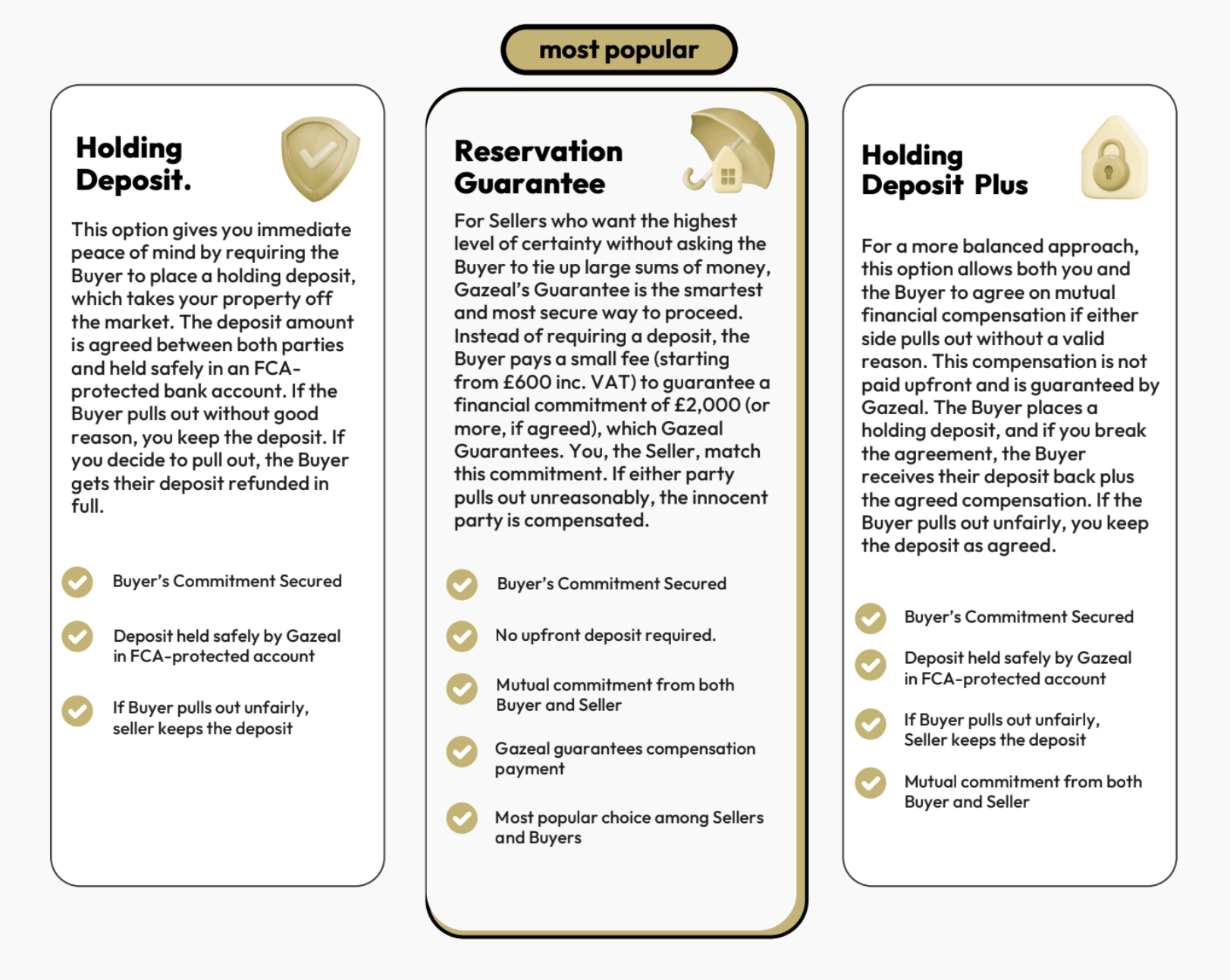
When we agree a sale, we now expect buyers to demonstrate their commitment upfront. In most cases, this starts with a holding deposit, typically from £1,000.
It’s a simple but important shift. The buyer is no longer just interested, they are invested.
For sellers, this provides immediate reassurance. You’re not just accepting an offer, you’re choosing a buyer who is prepared to commit to the process.
The deposit amount is agreed between both parties and held safely in an FCA-protected account via a secure third party, ensuring transparency and protection for everyone involved.
If a buyer withdraws without good reason, that deposit contributes towards the work already undertaken and allows us to move forward quickly, re-marketing the property without starting from scratch. If the seller decides not to proceed, the buyer receives their deposit back in full.
It introduces accountability early, without overcomplicating the process.

What does this mean for buyers?
This approach works just as well for buyers. By placing a holding deposit, buyers demonstrate commitment early, which can often put them ahead of competing offers. The deposit is agreed between both parties and held securely in an FCA-protected account through an independent third party.
In return, the seller will typically take the property off the market, giving the buyer the confidence to move forward without ongoing competition.
If the buyer withdraws without good reason, the deposit is forfeited. If the seller withdraws, the buyer receives a full refund. It’s a fair and balanced structure that gives both sides confidence.
For buyers wanting more certainty, a reservation agreement goes further by helping to lock in the price and reduce the risk of being outbid.
What does a holding deposit not protect vendors from?
We are always clear with our clients. A holding deposit is a strong step forward, but it doesn’t remove all risk. There is still the possibility of a deal falling apart, and it doesn’t fully eliminate risks such as gazumping/gazundering or last-minute changes in position.
For those who want greater certainty, there is a more secure option.
How does a reservation agreement protect your sale?
For sellers and buyers who want more control and confidence, we offer the option to upgrade to a reservation agreement.
Both parties enter into a formal agreement, with an agreed level of compensation if either side withdraws without a valid reason. This can be up to £10,000 depending on the property and agreement, and importantly, it is independently guaranteed.
What this does is fundamentally change the dynamic of the transaction.
The property is taken off the market. The agreed price is effectively locked in. The risks of gazumping, gazundering, or last-minute withdrawals are significantly reduced.
It’s a model that has been standard in new build purchases for years and is now becoming increasingly relevant in the resale market.
Why does this approach work so effectively?
The key isn’t just offering these options, it’s how they are introduced. We don’t leave this conversation until a deal has been agreed. By that point, it’s often too late. Instead, we build it into the process from the very beginning.
From the valuation, to viewings, to the point of offer, expectations are clearly set so both buyers and sellers understand how commitment works. That consistency is what drives the results.
What results does this deliver for our clients?
We’re not trying to fix a broken system. We’re refining one that already performs well and pushing it further.
By combining low fall-through rates, early buyer commitment, and proactive sales progression, we create a far more controlled and reliable moving experience.
Moving home will always involve some level of uncertainty, but with the right structure in place, that risk can be significantly reduced.
A better, more secure way to move home
At Sandersons, we are proud to do things differently. No fixed-term contracts, award-winning service, and a team that genuinely cares about achieving the best possible outcome for every client.
Introducing buyer commitment as standard is simply the next step in that journey.
If you’re thinking about moving, even if you’re not quite ready yet, getting your property market-ready early puts you in the strongest possible position when the right buyer comes along.

A summary of how to secure your sale or purchase